
When Should You Rebuild Your Stone Steps? 5 Clear Signs
Stone steps take a beating every day. They carry the weight of family, guests, deliveries and the freeze and thaw cycles of New York winters. Over time, even the best stone steps start to show wear. The real question for homeowners is not whether wear will show, but when it crosses the line from cosmetic to structural.
If you have been wondering whether your stone steps need a quick patch job or a full rebuild, you are not alone. We see this question every season at JS Masonry Construction LLC. Some signs mean you can wait another year. Others mean the steps are unsafe right now and need attention before someone gets hurt. Here are five clear signs that your stone steps need to be rebuilt, not just repaired.
1. Cracks That Run the Full Width of a Step
The most obvious sign is cracks. A hairline crack on a tread might just be cosmetic, but cracks that run the full width of a step are usually a sign of bigger problems underneath. Water gets into the crack, freezes in winter and forces the stone apart. The next year, that crack is wider. By year three, the step is in two pieces.
If you can fit a coin into the crack, or if you see daylight through it from below, the step is done. Patching will not hold. A full rebuild is the safe call, especially on the front entrance where guests and family use the steps every day of the year.
2. Uneven, Sunken or Wobbly Steps
Stone steps should sit level and feel solid underfoot. When a step starts to sink, tilt forward or wobble when you walk up, the base under the stones has shifted. This usually happens because the original gravel base was thin, drainage was poor, or freeze and thaw cycles pushed the soil under the steps.
Resetting one stone might buy you a season, but if the whole set is settling, the steps need to come out and the base needs to be rebuilt. Uneven steps are also a tripping hazard. We have seen falls happen on stairs that looked fine from a distance but had a one inch drop between treads.
3. Mortar Joints Are Falling Out
Look at the joints between stones. Healthy mortar is tight, level with the stone face and free of large cracks. When you start seeing chunks of mortar missing, sand falling out, or daylight between stones, the joints are failing. Water gets behind the stones, freezes and forces them apart. Once a few joints go, the rest follow fast.
Repointing can buy time on a set of steps that is otherwise sound. But if the joint failure comes with other signs like cracked stones or settling, the steps are past the point of patching. Rebuilding lets us reset the stones on a proper base with fresh, weather-rated mortar joints that hold up for years.
4. Water Pools Around or Under the Steps
Drainage is one of the most common reasons stone steps fail in New York. If you see water pooling at the base of the steps after rain, or if the area around the bottom step stays wet for days, water is sitting where it should not. That water saturates the base, freezes in winter and pushes the steps out of place.
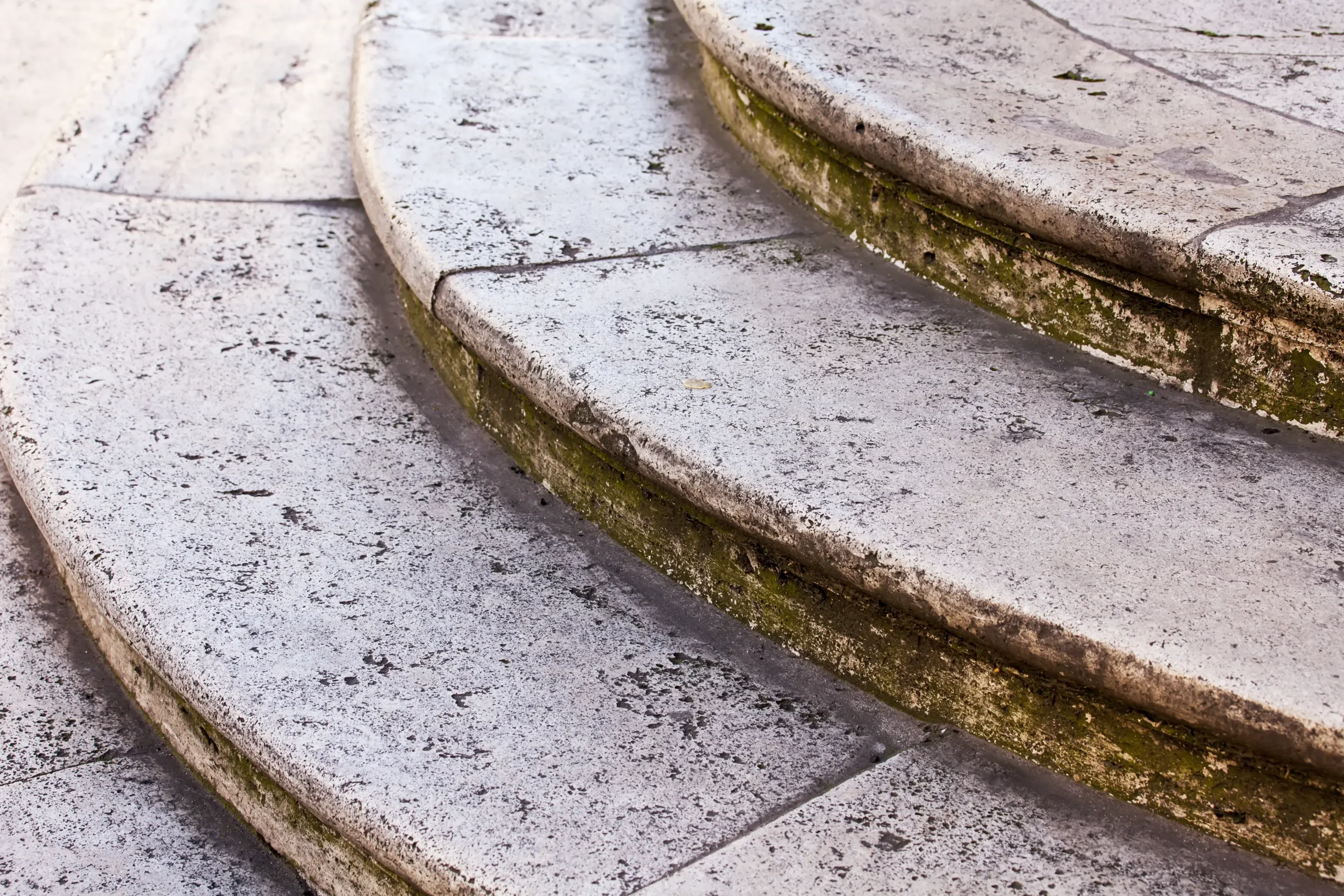
It also stains the stone and breeds moss on the treads, which gets slippery in cold weather. Fixing drainage often means rebuilding. We add a proper gravel base, install drainage where needed and reset the steps with the right slope. A repair without fixing the water problem will fail the same way the first set did.
5. The Steps Are More Than 30 Years Old
Stone lasts a long time, but the base, mortar and drainage under the steps do not. If your stone steps are 30 years old or more and showing any of the signs above, a rebuild is almost always the right call. The stones themselves may be reusable, but the foundation under them has likely shifted, settled or lost its drainage capacity.
A rebuild gives us the chance to reset everything from the ground up: proper base, proper drainage, proper joints. The result is a set of steps that looks right and holds up for another 30 years.
Frequently Asked Questions
Yes, sometimes. Single cracked stones, loose joints or one settled tread can often be repaired. We assess whether the base is sound and whether the rest of the structure is stable before deciding.
With proper installation, stone steps last 30 to 50 years or more. The base, drainage and joint work decide the lifespan more than the stone itself.
It depends on the number of steps, the stone, the base work and access. We give you a free written estimate after a site visit so the price is clear before any work starts.
Most residential step rebuilds in our area do not need a permit. If the steps are part of a structural retaining wall or commercial property, that may change. We help you check before we start.
Spring through fall is best. The ground is workable and the mortar cures properly. Winter rebuilds are possible but harder, and we usually recommend waiting until temperatures stay above freezing.
Get Your Free Stone Steps Estimate in New York
Worried about your stone steps? Call JS Masonry Construction LLC for a free written estimate and an honest assessment of repair or rebuild.